

Shift 2.0

About
Made to Race
FRAME MATERIAL
Carbon
TYRE CLEARANCE
up to 34mm
SYSTEM WEIGHT
from 7.25kg

Details


Down tube
Frame material
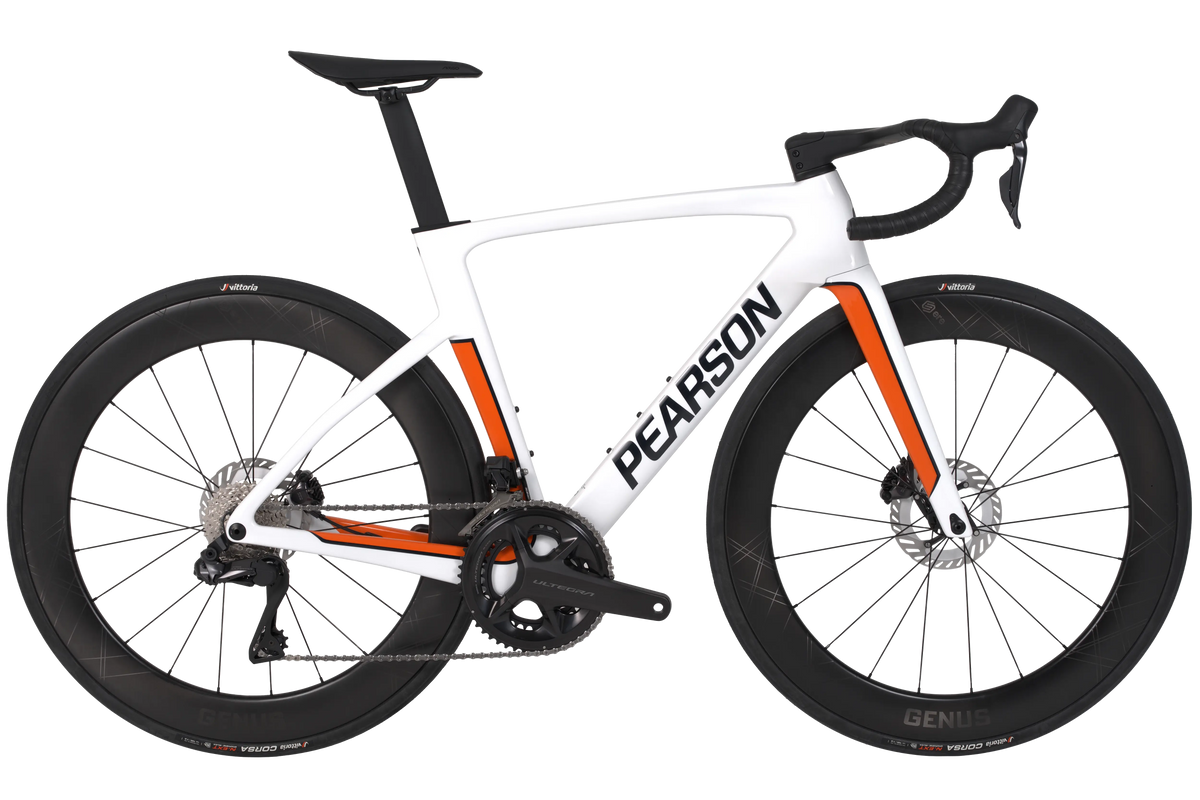
The frame is made from T1000 and high rigidity M40JB carbon, making it 20 percent lighter than the previous Shift.
It uses aerodynamic tube profiles honed for racing.
Why we built it this way
The frame feels quick from the moment you lift it, with increased stiffness that ensures your effort becomes forward motion.

Bottom bracket
Every watt forward
A stiffened bottom bracket shell ensures the power you put through the pedals becomes forward movement.
Ceramic Speed or Hope T47 bottom brackets keep the drivetrain running smoothly for longer.
Why we built it this way
The T47 standard is threaded, durable and simple to service in any competent workshop. Combined with class leading drive chain efficiency, less of your effort is lost on the way to the road.

Top tube
Data driven geometry
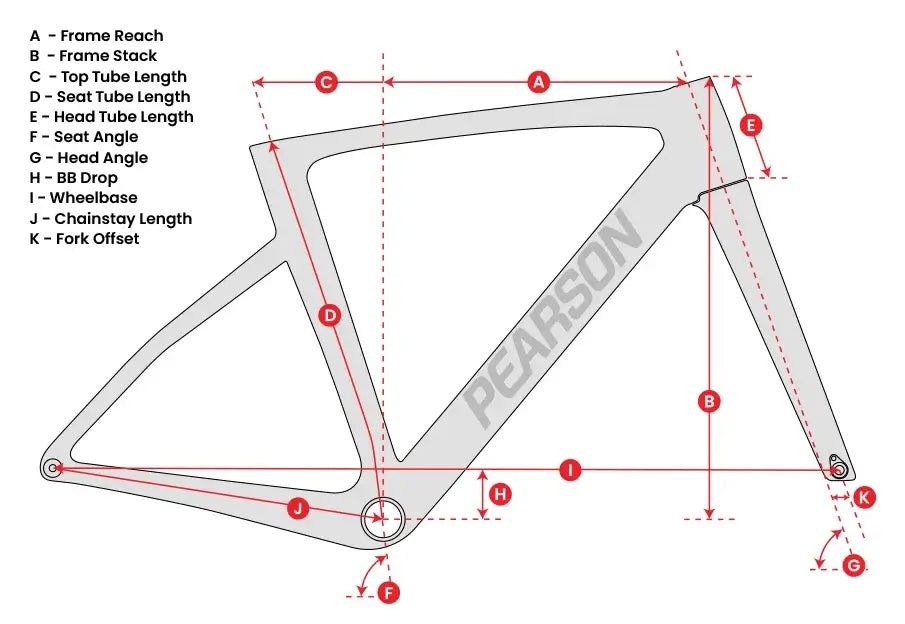
Data driven geometry creates handling tuned for racing.
It offers agility and dependable cornering.
Why we built it this way
Every frame is laboratory tested to ISO 4210 and the design is UCI approved, so it is ready to race.

Head tube
One piece cockpit
The one piece cockpit provides clean lines, turning on a Ceramic Speed headset.
The design leaves no excess cables in the airflow.
Why we built it this way
A combined bar and stem reduces the component count and keeps cables out of the wind, creating a front end that stays quiet at speed.

Seat tube
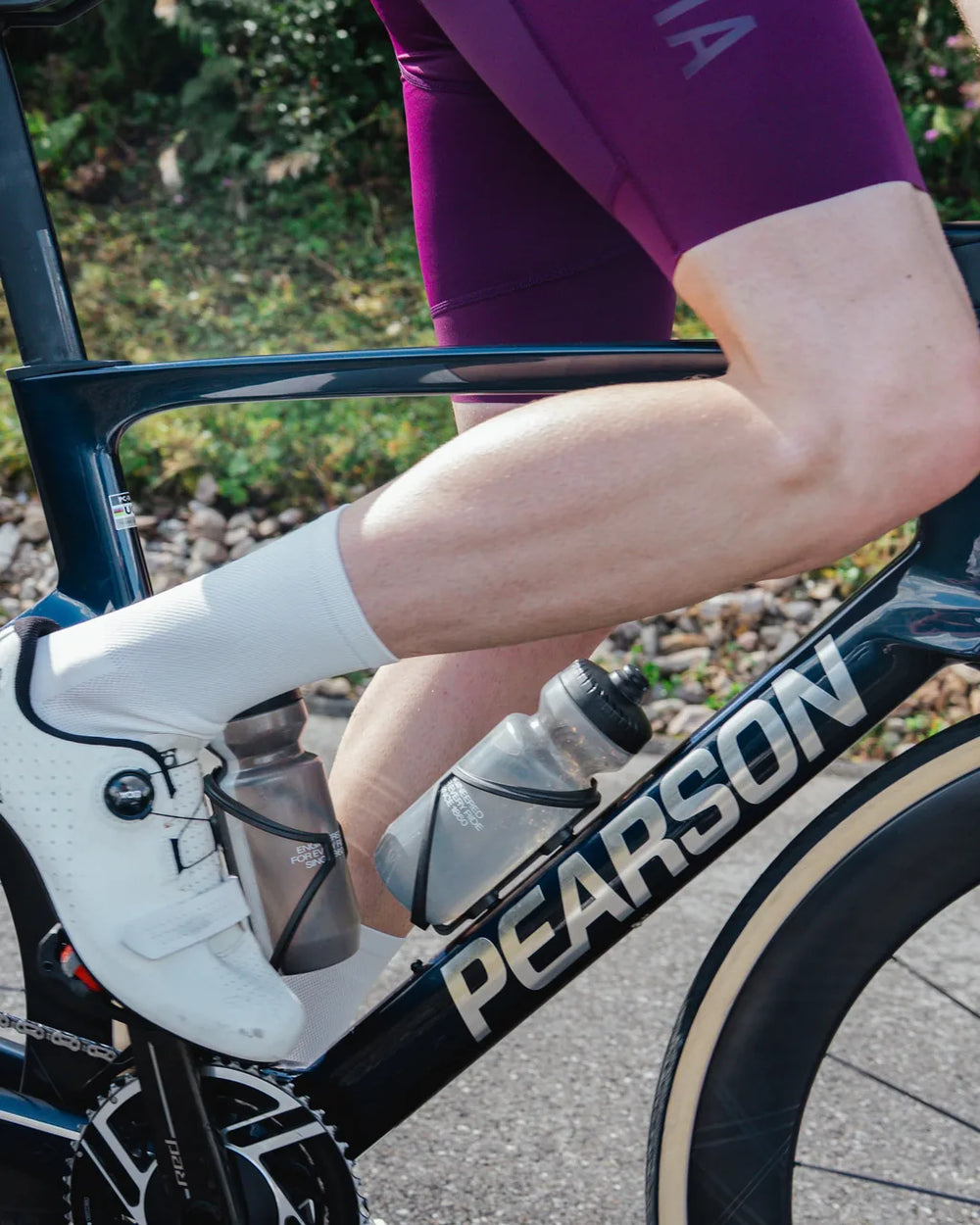
Triple bottle bosses
Three bottle bosses instead of two mean a race bike can still carry what a long day needs.
This is a detail that costs nothing on the start line and matters by the end.
Why we built it this way
The third boss carries an extra bottle or a tool keg on a longer ride. It is a small addition that makes a race machine more useful in training.

Fork crown
Tyre clearance
The frame and fork clear tyres up to 34mm, allowing a dedicated race bike to handle rougher road surfaces.
There is room to run a wider tyre at a lower pressure.
Why we built it this way
Wider tyres at lower pressures improve comfort and control when the road surface deteriorates, without compromising the bike's racing focus.
Engineering note · Shift
Where the watts actually go
Every aero bike you're looking at sits within a few watts of every other one. That's not cynicism. It's a reflection of where the industry has been focusing, and of how close we've all got within the limits of UCI regulations. Once every brand is working towards the same aerodynamic target, there are only so many watts left to find. So we went and measured the part that's genuinely ours.

Every brand has a wind tunnel number. We could have one too.
What doesn't usually get printed next to it is where those watts actually go. At racing speed, roughly three quarters of the drag comes from the rider, around 75 to 80%. The frame accounts for around 5 to 10%, with the wheels taking most of what's left.
And that headline figure is usually measured with nobody sitting on the bike.
Which is why position beats kit.
Move from the hoods to the drops and you've changed around 14% of your drag. Tuck your chin and you can save 10 to 15 watts at 40kph. That's more than a set of deep section wheels will ever give you on their own.
None of that is an argument against aero. It's an argument about where most of the aero really comes from.
Aero is mostly a rider problem. And a rider problem is a fit problem, which is a different note to this one.
So what's actually the bike's job?
Take the air out of the equation and one thing remains that no amount of position work will fix:
Turning what your legs produce into forward motion.
Every bike has losses, and every bike pays for them somewhere. The chain, the bearings, the tyre deforming against the road under your weight. There's a bill to pay between the pedals and the tarmac.

Unlike drag, it doesn't care how you sit.
It's the one number we can't hand back to the rider.
It's also the one we set out to get right. An efficient bike was a design target for the Shift 2.0, not something we hoped would fall out of the process.
A target is only worth having if you're willing to go and check it. So we asked somebody else to measure it.
01
How the Shift measured
We took the Shift, along with a range of competitors' bikes, to the Silverstone testing lab and put each one on their rolling road jig, to get an answer on how efficient the new Shift 2.0 really was.
The bike sits in a clamp, the rear wheel drives a weighted roller, and the rig measures power on both sides of the drivetrain. What goes in at the pedals, and what arrives at the road.
At 30kph the Shift loses about 30 watts. At 40kph, about 44 watts.

The ratio is the more interesting number.
As you ride harder, the losses grow more slowly than the power you're producing, so a greater proportion of what you're making ends up driving the bike forwards.
Shift, proportion of rider power reaching the roller
Share of rider power reaching the roller, per cent
70
75
80
85
90
303540
Held road speed, kph
7.1pts
more of your effort reaches the road at 40 kph than at 30, climbing from 77.9% to 85.0%.
That's a whole bike figure. The tyre and bearings are included too, not just the chain. That's why it sits well below the 95 to 98% efficiency figures you'll often see quoted for a chain on its own.
02
How it compared
Five other bikes went onto the rig that day, including our own Forge.
Same rig, same rider, same afternoon, same protocol. Same wheels and the same groupset, moved from frame to frame.
We ran the Shift three times and averaged them. It still came out in front.
Share of rider power reaching the road, at 40kph
Pearson ShiftPearson ForgeSpecialized AllezEnve MeleeCannondale LAB71Specialized S-Works
6.1W
more of your power reaching the road than the least efficient bike on the day. At 300 watts that's 24 seconds over a 40km ride, free.
Same order at 30kph, 35kph and 40kph. Nothing shuffled.
Our own Forge came second, and not by much.
Why the Shift is the efficient one
A comparison is only worth as much as the things it holds still.
So we held nearly everything still. One rider, one afternoon, one rig. The same wheels and the same tyres at the same pressure, taken off one bike and put on the next. The same groupset and the same chain, moved along with them.
The thing we changed between runs was the frame.
Which leaves the frame and the way the drivetrain is anchored to it: the bottom bracket. Where a frame would take our bottom bracket we fitted it, and where its own standard would not allow that, the frame kept its own. That difference belongs to the frame as much as its tube shapes do.
The Shift 2.0 runs a T47E shell. It is threaded, it is wide, and it puts the two bearings further apart than a press fit shell of the same weight can. Around it we rebuilt the layup at the junction where the down tube, the seat tube and the chainstays all arrive at once, because that is where a frame either holds its shape under load or gives some of your pedal stroke back as movement.
That layup is Toray carbon, with M40J fibre through the places carrying the most load. M40J is a high modulus grade: for a given weight it resists bending far harder than the standard grades do, which is exactly the property you want in a frame that is trying not to hand your pedal stroke back to you.
A wider bearing stance, a stiffer junction, and a fibre chosen to hold both. More of what you put in, arriving at the back wheel.
We designed the Shift 2.0 to give less of your effort away, and then asked somebody else to check.
Method
Wheels, tyres, groupset and chain were moved from bike to bike so that the frame was as close to the only variable as we could make it. Bottom brackets were matched where a frame would accept ours and left alone where it would not.
Drag was fixed at one value across every run as a rig input, so there is no aerodynamic result in this data. A single bike mass was entered for every bike, so there is no weight result either. The rig measures the whole bike, so no single part can be credited with a watt of the difference.
Figure 1 plots the Shift on its own. In figure 2 the Shift is the mean of its three runs and every other bike is its single recorded run.
We've retained the full force and power logs for all 30 individual recordings.
Shift 2.0 · Made to order
Build your Shift 2.0.
Pick a colour and a groupset; see it exactly as it will be built. Spin it, zoom it, put it in your garden with AR.
Drag to spin
System weight
Groupset
Wheelset

Reviews
Great bike for the price and good service from Pearson Cycles. Does everything I want from it.


Lifetime Warranty
Guaranteed performance for the life of your frame, transferable for 5 years.
Learn more