Dura-Ace vs Ultegra: is it worth it?
Dura-Ace vs Ultegra is one of the most common questions when speccing a road bike. For most riders the honest answer is that Ultegra is the smarter spend. Dura-Ace is the better groupset, but the gap is marginal in everyday riding, and the £700 to £1000 premium buys weight and refinement rather than a transformation in how the bike rides.
What is actually different between Dura-Ace R9200 and Ultegra R8100
Both groupsets are electronic, both run 12-speed cassettes, and both use the same hydraulic disc brake architecture. Shimano engineered them to share the same core technology, so the differences are real but rarely transformative for riders doing weekend miles or training for sportives.
Weight
This is the headline figure. A complete Dura-Ace R9200 groupset weighs roughly 2340g. Ultegra R8100 comes in around 2720g. That is approximately 380g across the full groupset: cranks, derailleurs, cassette, brakes, shifters, battery and wiring.
To put that in context, 380g is a small bidon of water, or the weight of a mid-range tyre. On a 50km club ride with 800m of climbing it equates to a few seconds at most. On a flat Tuesday evening chain gang it means nothing. If you target KOMs, race crits or shave every gram for an A-race, the weight matters. If you are a 75kg rider doing 200km a week for fitness, it does not.
Shifting feel
Both systems shift quickly and reliably. Electronic shifting largely removed the feel gap that existed between Dura-Ace and Ultegra in the mechanical era. Experienced riders will notice Dura-Ace shifts with marginally more precision and a slightly crisper action under load, but this is a subtle difference rather than a night-and-day revelation. In wet British weather and winter grime, both groupsets perform near identically. The gap you feel in a controlled turbo comparison largely disappears on a three-hour ride through the Surrey hills.
Braking performance
Braking performance is virtually identical. Both use Shimano's flat-mount hydraulic disc system with the same caliper architecture. The Dura-Ace levers feel marginally more refined, with a better blade shape and a touch more feedback, but both stop you equally fast. This is not a meaningful differentiator.
Durability
This is where things get interesting. Dura-Ace uses higher-grade aluminium alloys, tighter tolerances and more titanium fasteners, so in theory it is more durable. In practice Ultegra R8100 has proven extremely robust, and Ultegra cassettes and chains often wear at a similar rate to Dura-Ace under real-world use, sometimes better, because riders treat expensive Dura-Ace groupsets more carefully. Neither is fragile. If you are worried about longevity, your maintenance habits matter more than which groupset you choose.
The numbers side by side
| Specification | Dura-Ace R9200 | Ultegra R8100 |
|---|---|---|
| Speeds | 12-speed | 12-speed |
| Full groupset weight | around 2340g | around 2720g |
| Weight saving | around 380g lighter | Baseline |
| Typical build cost premium | plus £700 to £1100 | Baseline |
| Shifting technology | Electronic | Electronic |
| Brake type | Hydraulic disc | Hydraulic disc |
| Crank material | Carbon fibre | Aluminium |
| Cassette material | Titanium and steel | Steel |
| Best suited for | Racing, weight-focused riders | Most riders |
Who should actually choose Dura-Ace
There are legitimate reasons to go Dura-Ace. Be honest with yourself about whether they apply to you.
- You race competitively and every gram and millisecond genuinely counts. Cat 1 to 3 road racers, criterium specialists and time triallists can justify it.
- You are a climber focused on power to weight. If you are targeting mountain sportives, already sub-70kg and riding gradients above 12 per cent, the weight saving has measurable impact.
- You simply want the best and you have the budget. There is nothing wrong with buying the top-tier groupset because it is the top tier.
- You plan to keep the bike for a decade or more and want the feel of premium components throughout its life.
Who should choose Ultegra
The vast majority of road cyclists, including very good ones.
- Weekend riders and sportive riders doing 100km to 300km per week.
- Anyone building a do-everything road bike they will also ride in winter.
- Riders who want to put the price difference into better wheels, a bike fit, or simply keep it in their pocket.
- Anyone building their first quality road bike. Learn on Ultegra and upgrade later if it matters to you.
Ultegra R8100 is, by any objective measure, an exceptional groupset. It shifts faultlessly, brakes with confidence and will last years of hard use. Calling it a compromise is unfair. It is the choice that makes sense for most people.
What the price difference actually buys you
On a complete bike build, the jump from Ultegra to Dura-Ace typically adds £700 to £1100, depending on the brand and spec. That money buys you around 380g in weight savings, carbon cranks instead of aluminium, a titanium-splined cassette and marginally refined lever feel. Alternatively, the same spend could buy a wheel upgrade that genuinely transforms how the bike rides, a professional saddle fitting that solves a chronic comfort issue, or quality winter training kit. Spend it where it has the most impact on your riding.
Forge: available with both
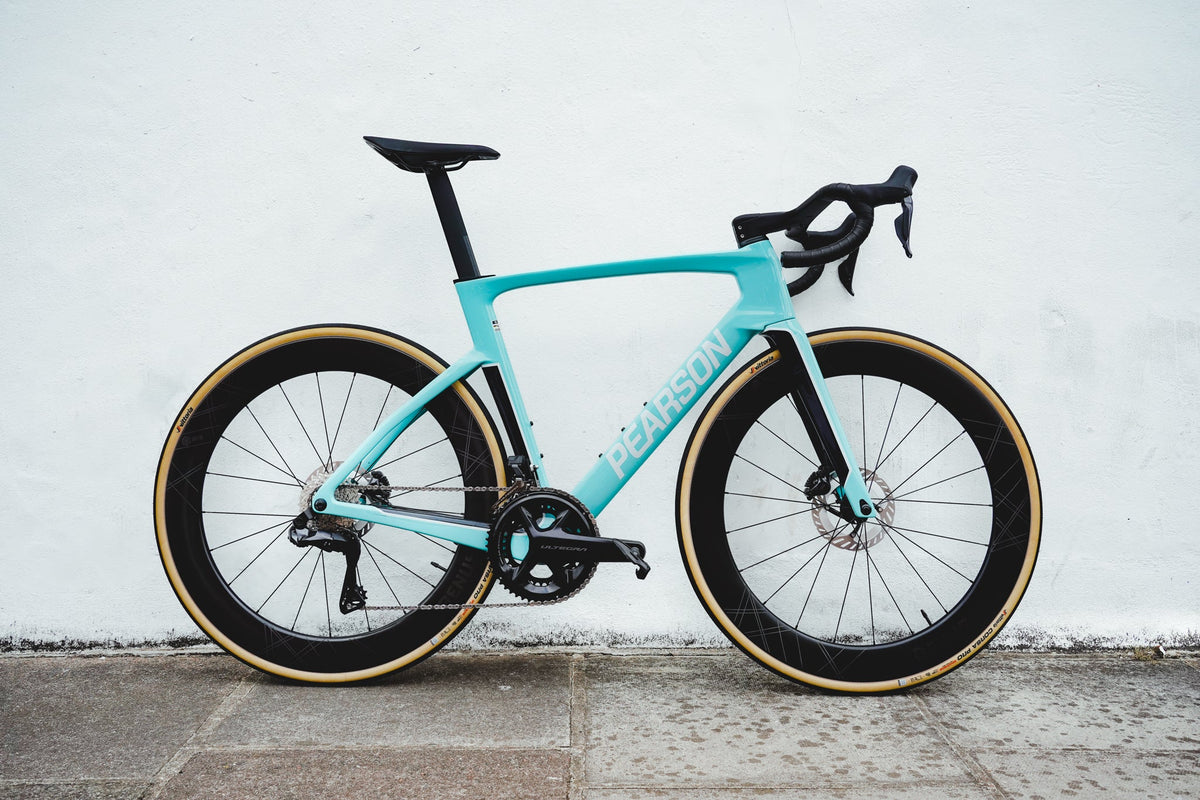
Forge, our performance endurance road bike, is offered with both Ultegra and Dura-Ace builds. If you want the Dura-Ace build, we will spec it. If Ultegra makes more sense for how you ride, that is the right choice, and you get the same frame either way: designed in London, then built, specced and tested by the Pearson team. The geometry is informed by 2,000+ professional bike fits collected over 13 years, and every frame and fork carries a lifetime warranty for the original owner, transferable within the first 5 years. If you prefer to start from the frame, the Forge frameset is available from £2850.
The groupset is one component of a bike. The frame geometry, the fit and the wheels have far more impact on how a bike feels and how well it performs for your body and riding style. Do not let the groupset spec be the tail that wags the dog.
The bottom line
Dura-Ace is the better groupset. The question is whether it is better for you, and for most riders doing most things, Ultegra is the smarter spend. The shifting gap that once justified the Dura-Ace premium largely vanished when both went electronic. You are now paying for marginal weight savings and premium materials, meaningful for racers and largely irrelevant for everyone else.
Buy Dura-Ace if you race, if you are focused on weight, or if you simply want it and can afford it. Buy Ultegra if you want outstanding performance and a sensible build cost, and consider where else that saved money can improve your riding.
Frequently asked questions
Is Dura-Ace worth it over Ultegra?
For most riders, no. Both are 12-speed electronic groupsets that shift and brake near identically. Dura-Ace is lighter and more refined, which justifies the premium for racers and weight-focused riders, but Ultegra is the smarter spend for everyday road riding.
How much lighter is Dura-Ace than Ultegra?
A complete Dura-Ace R9200 groupset weighs around 2340g against roughly 2720g for Ultegra R8100, a difference of about 380g across the full groupset.
Do Dura-Ace and Ultegra brake differently?
Braking is effectively identical. Both use the same flat-mount hydraulic disc architecture. Dura-Ace levers feel marginally more refined, but stopping power is the same.
What should I spend the saving on instead of Dura-Ace?
A wheel upgrade, better tyres or a professional bike fit will usually change how the bike rides far more than the step from Ultegra to Dura-Ace.
If you are unsure which build suits your riding, start with your position. Understand the fit first, then build the bike around it. Explore Forge and its available specifications when you are ready.