We sat down with Scott Decker, Bicycle Design & Product Manager at Pearson, to talk through how the Forge came to life — the thinking, the data, and the decisions behind our Performance Endurance road bike.
The inspiration behind the Forge
"The Forge came out of two frustrations. Customers wanted a high-performance road bike — but after their bike fit, we often had to compromise the setup to make a race-bred frame work. So much road geometry is designed around pro teams. We wanted to start from our customers' needs instead."
The design brief
The goal: an uncompromised riding position for a broad range of riders. It had to ride and look like a performance bike — fast, a strong climber, sharp handling, clean lines — without giving up the comfort and compliance of an endurance bike.
The outcome
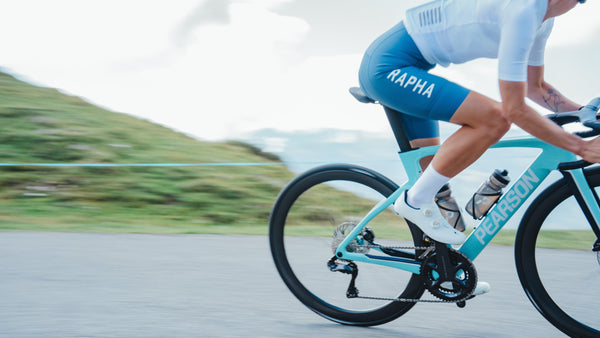
The Forge is a performance endurance road bike with, we'd argue, no real compromise. The frame weighs just 890g in a size medium. We stiffened the down tube, bottom bracket and chainstays for out-of-the-saddle efforts, then kept compliance through flattened seatstays and a slimmer top tube. Aero profiles run across the frame and seatpost, handling balances stability with quick cornering, and full internal routing, hidden mudguard mounts and multiple bottle mounts make it genuinely versatile. It comes in five sizes — including fringe sizes 1 and 5 that many brands skip.
Fit-first geometry
"We analysed saddle height against reach and found that for taller riders, reach wasn't getting progressively longer — traditional geometries fit the midsection but fall short at the extremes. We also needed a wider range of stack: some race bikes top out around 580mm, but our data showed we needed up to 645mm for the largest size. Bar drop and setback rise incrementally with saddle height too."
From data to design
Designing the Forge meant balancing fit measurements (seat tube, head tube, top tube, stack and reach) against handling measurements (seat angle, head angle, fork rake, chainstay length). The team started with size 3, designed sizes 1 and 5 to cover the extremes of the data, then filled in 2 and 4 — refining in CAD, testing alloy frames, and building carbon mockups and pre-production models to prove it in the real world.
Faster. Further.
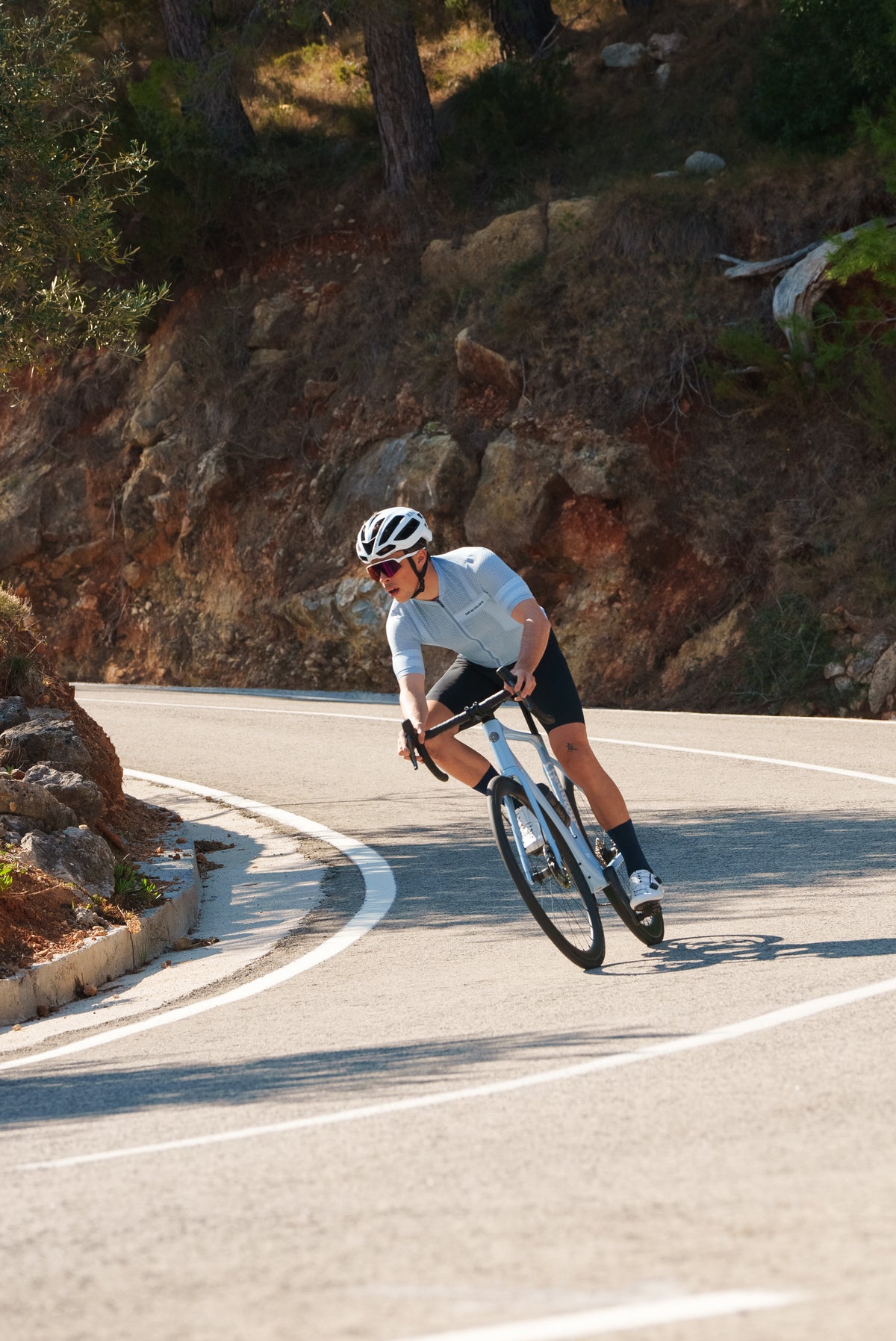
It might sound like splitting hairs, but we think the Forge defines a new category: Performance Endurance. It'll eat miles on a long day and keep you fresh, yet still sprint and corner like a race bike when you want it to.
Want the models and pricing, or to talk it through with our team? Explore the Forge.